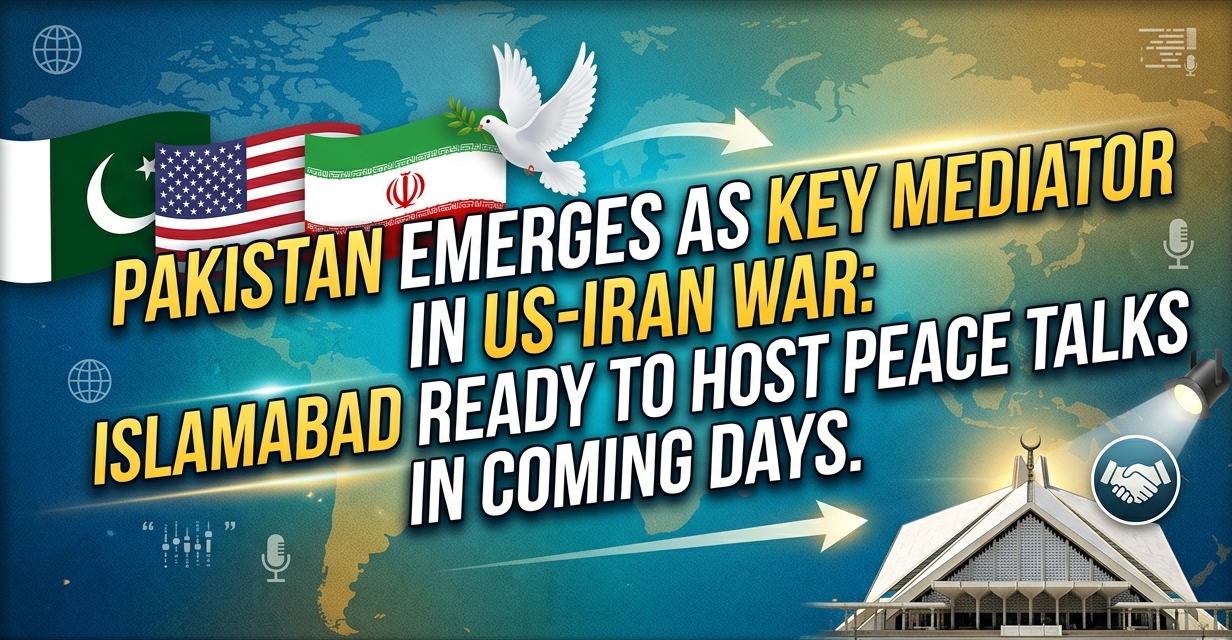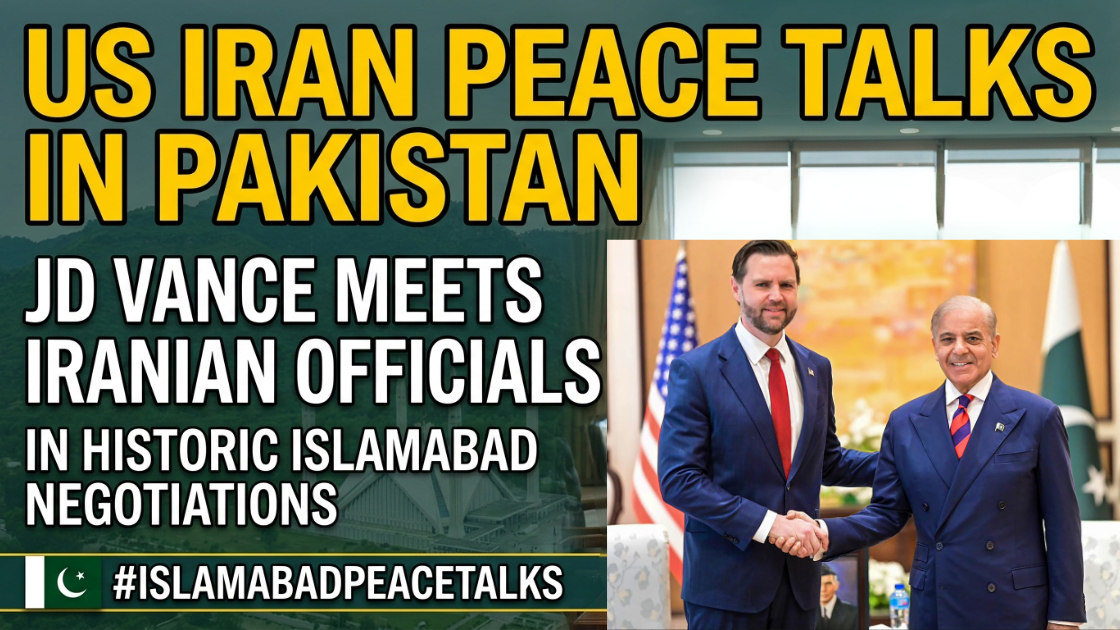
As of April 11, 2026 (with developments extending into the early hours of April 12 local time in Islamabad), the United States and Iran are engaged in historic high-level direct face-to-face peace talks in Islamabad, Pakistan. These negotiations mark the highest-level direct engagement between the two nations since the 1979 Iranian Revolution, shifting from previous indirect or mediated formats (often via Oman or other intermediaries) to trilateral in-person discussions with Pakistan acting as host and mediator.
Background: How the Conflict Escalated and Talks Emerged
The talks stem from a six-week war that began on February 28, 2026, when the US and Israel launched a series of strikes on Iran, including the killing of Supreme Leader Ayatollah Ali Khamenei. The conflict involved intense military actions, disruptions to global energy supplies, and significant casualties across the region. Iran responded by closing or restricting access to the Strait of Hormuz, a critical chokepoint for global oil trade, which exacerbated economic pressures worldwide.
Pakistan played a pivotal mediating role in the lead-up:
- Pakistani Prime Minister Shehbaz Sharif proposed and helped broker a fragile two-week ceasefire in early April 2026.
- Islamabad positioned itself as a neutral venue, leveraging its diplomatic ties with both Washington (longstanding security and economic relations) and Tehran (neighborly, albeit complex, relations). A two-day holiday was declared in the capital ahead of the talks, and heavy security measures were implemented, including around key venues like the Serena Hotel.
Prior rounds of US-Iran negotiations occurred in 2025–early 2026 (e.g., in Oman, Rome, and Geneva), but these were mostly indirect. The Islamabad talks represent a breakthrough in direct engagement, building on Pakistan-mediated efforts.
Key Participants
- US Delegation: Led by Vice President JD Vance, accompanied by President Donald Trump’s special envoy Steve Witkoff and advisor/son-in-law Jared Kushner. Vance’s prominent role reflects his reported skepticism toward prolonged conflict within the administration. The delegation arrived via a US government plane on April 11.
- Iranian Delegation: Led by Parliament Speaker Mohammad Bagher Qalibaf (also referred to as Ghalibaf), with Foreign Minister Abbas Araghchi (or Araqchi) and other senior officials, including possibly Ali Bagheri. The team arrived in Islamabad on April 10–11.
- Pakistani Hosts/Mediators: Prime Minister Shehbaz Sharif, with involvement from military and diplomatic officials. Both US and Iranian teams held separate bilateral meetings with Sharif before transitioning to trilateral or direct formats.
Format and Progress of the Talks (as of April 11–12, 2026)
Negotiations began on Saturday, April 11, 2026, in Islamabad. Key developments:
- Initial separate bilateral meetings with Pakistani officials.
- Transition to trilateral face-to-face talks (US, Iran, and Pakistan in the same room), confirmed by the White House, Pakistani sources, Iranian state media (e.g., Tasnim News Agency), and outlets like CNN, BBC, Al Jazeera, NYT, and AP.
- Multiple rounds occurred: At least two full rounds by evening, with a third extending late into the night (past midnight into Sunday local time). Sessions stretched into marathon discussions, with expert teams exchanging written texts/proposals.
- Atmosphere described as “largely positive” by some US sources, though deep differences persist. Pakistani officials set a “modest” goal: extending the ceasefire and keeping dialogue alive rather than expecting a comprehensive deal immediately.
No final agreement has been announced as of the latest reports (late April 11/early April 12). Talks are ongoing, with potential continuation into Sunday. Iran’s state TV reported progress on some fronts but highlighted sticking points.
Core Issues on the Agenda
Major points of contention include:
- Strait of Hormuz: Iran’s leverage via control/restrictions on this vital waterway (through which much of the world’s oil passes). The US has signaled military moves to “clear out” the strait, with President Trump publicly commenting on naval actions. Traffic remains low amid tensions; this remains a key sticking point.
- Ceasefire Extensions and Regional Conflicts: Iran demands a halt to Israeli strikes in Lebanon (and possibly broader de-escalation involving Hezbollah). Israel has continued some operations, testing the fragile truce. Talks between Israel and Lebanon are separately slated to begin soon in Washington.
- Sanctions Relief and Nuclear Issues: Iran seeks unfreezing of assets and sanctions relief. Broader nuclear program concerns (Iran has pushed for recognition of certain rights) are in play, echoing earlier 2025–2026 negotiation rounds.
- Broader War End: A long-term settlement to end the US-Israel-Iran conflict, including security guarantees and economic impacts. Iran claims it enters from a “position of strength,” arguing the war failed to achieve decisive US/Israeli gains. The US has issued ultimatums, with Trump warning the US is “ready to go” if talks falter.
Iran presented elements of a 10-point proposal; the US has its own framework. Differences on Lebanon, Hormuz access, and sanctions are significant, but both sides show intent to negotiate seriously.
Significance and Global Context
- Historic Nature: First direct high-level US-Iran talks in decades, bypassing intermediaries in the same room—a departure from past formats.
- Pakistan’s Role: Boosts Islamabad’s diplomatic stature (comparable to past mediations like US-China in 1971 or Afghan processes). However, Pakistan faces domestic economic strain from disrupted oil flows.
- Risks: The ceasefire is fragile, with allegations of violations from both sides. Failure could resume hostilities, further impacting global energy markets, shipping, and regional stability (including Lebanon and the Gulf).
- Broader Implications: Affects oil prices, international alliances (NATO, Gulf states), and the Trump administration’s foreign policy. Analysts note Iran’s “upper hand” perception due to Hormuz leverage, while the US emphasizes military readiness.
Latest Updates (as of April 11 Evening/Night 2026)
- Talks described as “ongoing” and “progressing” by multiple sources, with trilateral sessions confirmed.
- No breakthrough announced; focus remains on technical details and framework-building.
- Media coverage is intense, with live updates from CNN, BBC, Al Jazeera, NYT, Reuters, AP, and others highlighting the marathon nature.
- President Trump’s comments on Hormuz operations add pressure but also signal US leverage.
The situation remains fluid. No comprehensive deal is confirmed, and outcomes could range from a short-term extension of the ceasefire to more substantive progress on de-escalation.
Key Sources for Further Reading
- CNN: Live coverage of direct talks and Vance delegation.
- Al Jazeera: Detailed reporting on Hormuz leverage, delegations, and Iranian positions.
- The New York Times: Background on ceasefire and live updates.
- BBC: Significance and Pakistani hosting role.
- Reuters and AP: On-the-ground details from Islamabad, including venue and rounds of talks.
- Wikipedia entry on 2025–2026 Iran–US negotiations (for timeline context).