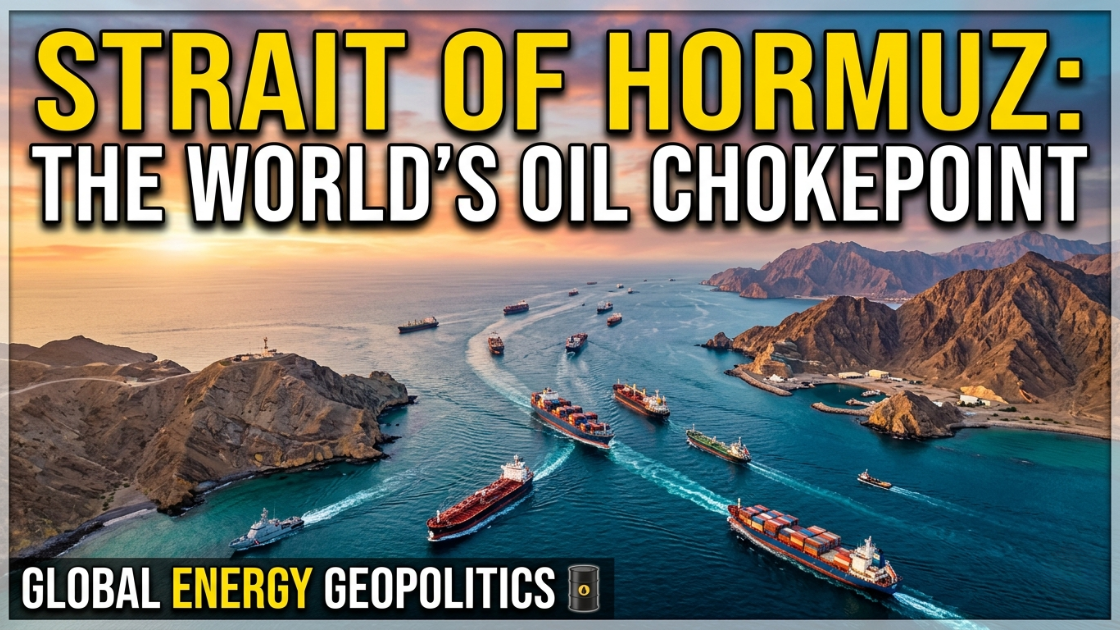
The Strait of Hormuz is one of the world’s most critical and strategically vital maritime chokepoints. It serves as the narrow waterway connecting the Persian Gulf to the Gulf of Oman and the open Arabian Sea, making it the only sea route for oil and gas exports from the world’s largest energy reserves in the Gulf region.
Geography and Physical Characteristics
The strait lies between Iran to the north and the Musandam Peninsula of Oman (with a small portion under the United Arab Emirates) to the south. It stretches approximately 167 km (104 miles) in length. Its width varies significantly: up to 97 km (60 miles) at the widest points and as narrow as 33–39 km (21–24 miles) at the narrowest.
Shipping traffic follows a strict Traffic Separation Scheme (TSS) with two 3.2 km (2-mile)-wide lanes for inbound and outbound vessels, separated by a 3.2 km buffer zone. The waterway is deep enough for the world’s largest supertankers (Ultra Large Crude Carriers), with depths often exceeding 60–200 meters in navigable areas. Key islands in or near the strait include Hormuz Island (famous for its red ochre soil and historical significance), Qeshm, Hengam, and disputed islands like Abu Musa, Greater Tunb, and Lesser Tunb (controlled by Iran but claimed by the UAE).
Geologically, the strait formed from the collision of the Arabian and Eurasian tectonic plates millions of years ago, creating the dramatic landscapes of the Zagros Mountains to the north and the rugged Musandam fjords to the south.
Strategic and Economic Importance
The Strait of Hormuz handles roughly 20–25% of the world’s seaborne traded oil and a significant portion of liquefied natural gas (LNG). In recent pre-conflict years (2023–2025), daily flows averaged 17–21 million barrels per day (bbl/d) of crude oil and condensates, plus substantial LNG volumes (nearly all of Qatar’s exports, representing about one-third of global LNG trade). About 80% of this oil heads to Asia, particularly China, India, Japan, and South Korea.
It also carries other commodities, including fertilizers. Disruption here has immediate global ripple effects: higher energy prices, inflation, supply chain issues, and potential shortages in import-dependent economies. Unlike other chokepoints (e.g., Strait of Malacca), few viable short-term alternatives exist for Gulf oil—pipelines to the Red Sea or Mediterranean are limited in capacity and vulnerable themselves.
Historical Background
The strait has been a trade hub for millennia. In ancient times, it facilitated commerce between Mesopotamia, Persia, and the Indian Ocean civilizations. The Kingdom of Hormuz (a medieval Arab trading state) flourished here from the 11th–16th centuries, controlling tolls on passing ships and serving as a key entrepôt before Portuguese, then British, influence grew.
Modern strategic importance surged with the oil boom in the 20th century. The discovery and exploitation of vast Gulf oil reserves turned the strait into the “jugular vein” of the global energy economy.
Major Historical Conflicts and Incidents
The strait has repeatedly become a flashpoint during regional tensions:
- 1980s Iran-Iraq War (Tanker War, 1984–1988): As the land war stalemated, both sides targeted oil infrastructure and shipping. Iraq attacked Iranian tankers and facilities; Iran retaliated by attacking third-country vessels and laying naval mines in the strait and Persian Gulf. This “Tanker War” disrupted shipping, prompted the US to reflag and escort Kuwaiti tankers (Operation Earnest Will), and led to direct US-Iran naval clashes, including the 1988 Operation Praying Mantis (US destruction of Iranian naval assets) and the tragic downing of Iran Air Flight 655. Traffic continued but at higher risk and cost.
- Post-2000 Tensions: Iran has periodically threatened to close the strait in response to sanctions or military threats. In 2019, amid US “maximum pressure” campaign, there were limpet mine attacks on tankers (blamed on Iran, denied by Tehran), seizures of vessels, and harassment by Iranian speedboats. Similar incidents occurred in 2021 (drone attack on an Israeli-linked tanker).
These events highlighted Iran’s asymmetric capabilities: naval mines, anti-ship missiles, fast-attack boats (swarm tactics), and coastal defenses from islands and the mainland.
Present-Day Situation (as of April 11–12, 2026)
The strait is at the center of the ongoing 2026 Iran War, which began on February 28, 2026, with US and Israeli strikes on Iran (including the killing of Supreme Leader Ayatollah Ali Khamenei). In retaliation, Iran restricted or effectively closed access to the strait, mining areas, harassing vessels, and forcing ships into controlled routes near Iranian islands like Larak. Traffic plummeted to as low as 5–10% of normal volumes (from ~140 ships/day to just a handful), causing global oil prices to surge over 70% in some periods, fuel shortages in parts of Asia, and broader economic shocks.
A fragile two-week ceasefire was agreed around April 7–8, 2026, partly conditioned on safe passage through the strait. Iran stated it would allow coordinated transits “if attacks against Iran are halted,” but implementation has been slow and contentious. As of April 11, 2026:
- Traffic remains heavily restricted (often under 10–15 vessels per day, mostly non-tanker or Iran-linked).
- Iran has asserted control by directing ships through specific corridors in its territorial waters and reportedly charging high “tolls” or fees.
- US Navy warships have transited or conducted operations to clear mines, with claims of Iranian mining denied by Tehran.
- Hundreds of tankers (reports of over 400 oil tankers) are queued or diverted, creating massive backlogs.
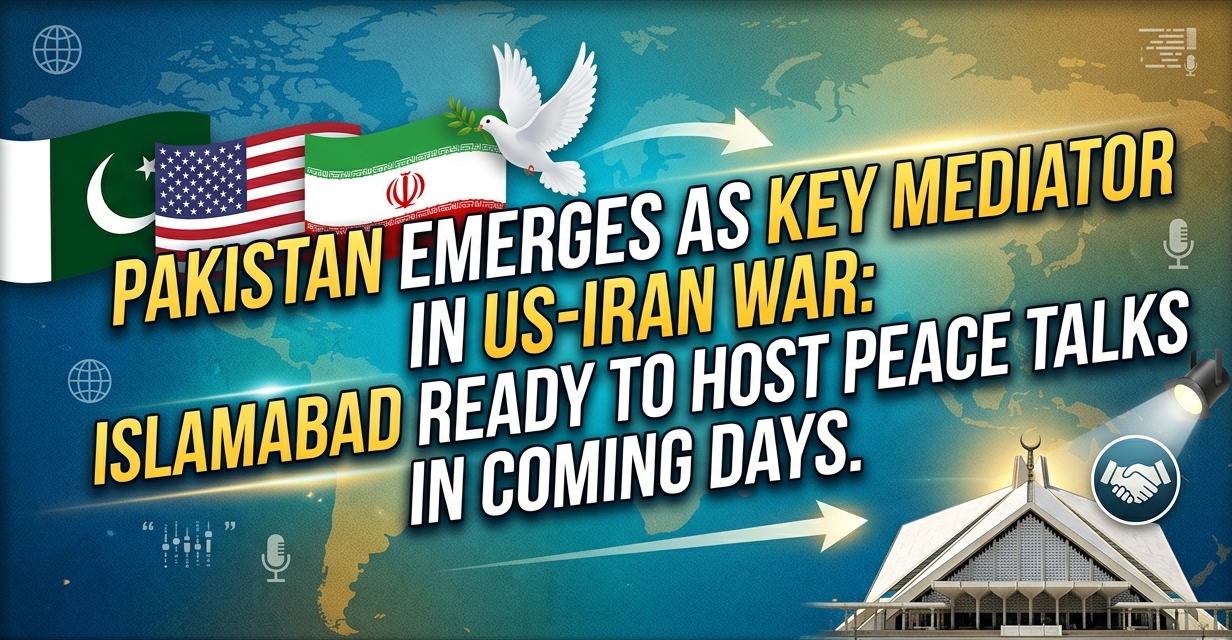
The issue looms large in the direct US-Iran peace talks currently underway in Islamabad, Pakistan (involving US Vice President JD Vance and Iranian officials, hosted by Pakistan). The strait remains a major sticking point: the US demands unconditional reopening and free navigation, while Iran seeks concessions on sanctions, nuclear issues, and regional de-escalation (including Lebanon). President Trump has warned of further military action if the strait is not fully opened safely.
Military and Security Dimensions
Iran’s Islamic Revolutionary Guard Corps (IRGC) Navy maintains strong presence with bases at Bandar Abbas and capabilities for mine-laying, missile strikes, and swarm attacks. The US Fifth Fleet (based in Bahrain) routinely conducts freedom-of-navigation operations. Any escalation risks rapid spillover, given the narrow confines and proximity to military assets.
International law (UNCLOS) guarantees innocent passage, but enforcement in conflict is challenging. Insurance premiums for vessels skyrocket during tensions, further deterring traffic.
Global Impacts of Disruptions
- Energy Markets: Even partial closures spike Brent crude and gasoline prices, hurting consumers and industries worldwide.
- Supply Chains: Fertilizer and other goods are affected, potentially raising food prices.
- Alternative Routes: Limited options include pipelines (e.g., Saudi Arabia’s to Yanbu on the Red Sea) or longer voyages around Africa, both costly and insufficient for full Gulf volumes.
- Economic Ripple Effects: Asia suffers most due to heavy reliance; developing nations face fuel shortages and inflation.
In the 2026 conflict, disruptions have already contributed to regional displacement, higher global inflation risks, and hesitation by other powers to intervene militarily.
Future Outlook and Alternatives
Long-term stability depends on diplomacy, as seen in the ongoing Islamabad talks. Potential mitigations include expanded pipelines, diversified energy sources (renewables, US shale, etc.), and strategic petroleum reserves. However, the strait’s geography makes it inherently vulnerable—no easy bypass exists.
The Strait of Hormuz exemplifies how a narrow geographic feature can wield outsized influence over global affairs. Its history of tension, combined with current events in the 2026 war and peace negotiations, underscores the need for de-escalation to safeguard one of the planet’s most essential arteries of commerce.
This article draws from verified reports by Britannica, BBC, Reuters, EIA, Wikipedia, Al Jazeera, NYT, and other sources up to April 11, 2026. The situation remains fluid—monitor reliable news for further developments in the US-Iran talks and shipping data.
Also read:
US Iran Peace Talks in Pakistan: JD Vance Meets Iranian Officials in Historic Islamabad Negotiations
Pakistan Emerges as Key Mediator in US-Iran War: Islamabad Ready to Host Peace Talks in Coming Days