Historic Direct Talks End Without Agreement
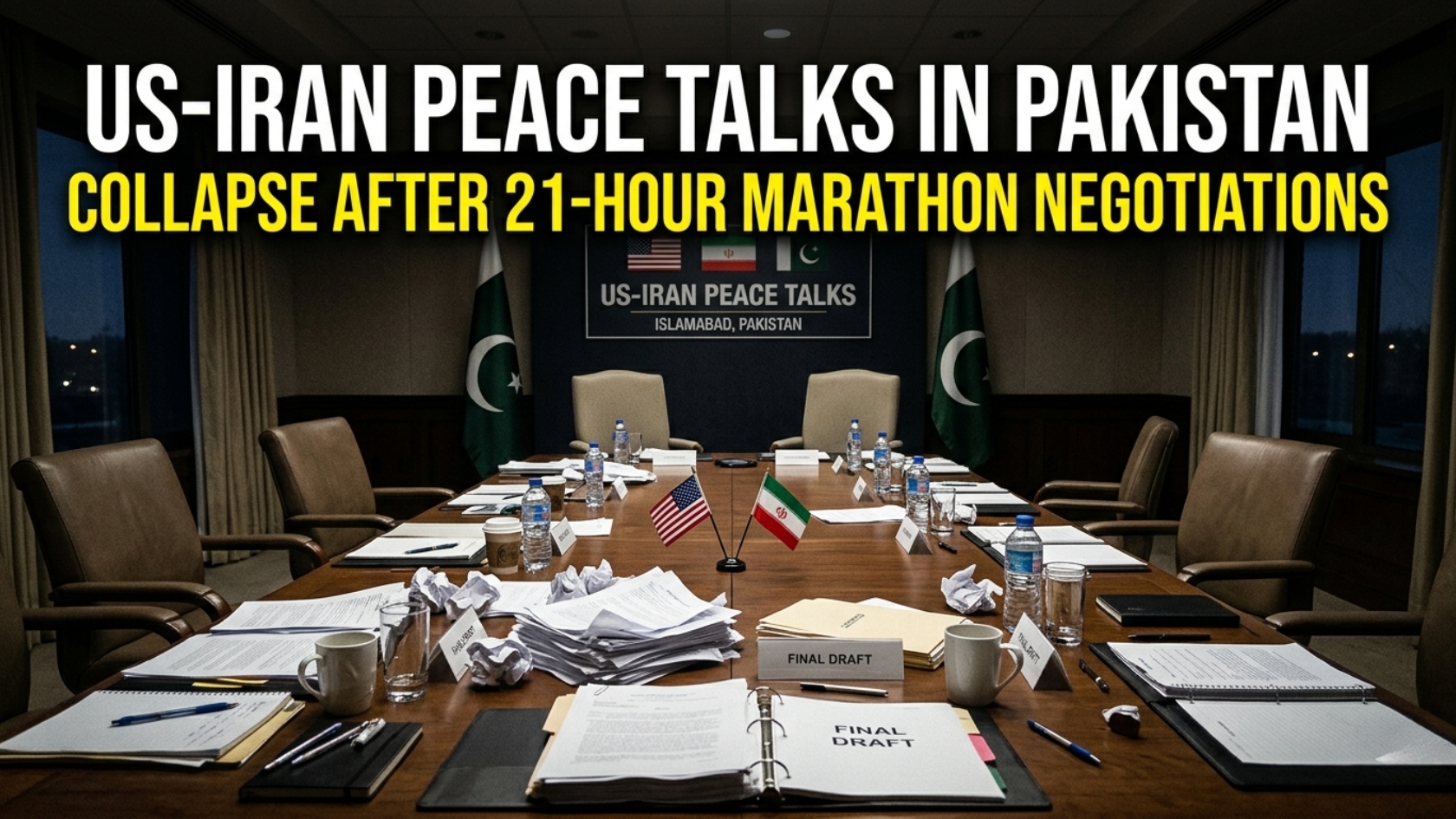
The United States and Iran concluded their first high-level face-to-face peace talks since the 1979 Islamic Revolution without reaching any agreement. The negotiations, hosted by Pakistan in Islamabad, lasted over 21 hours from April 11 into the early morning of April 12, 2026. US Vice President JD Vance, who led the American side, announced the failure shortly before departing Pakistan.
These talks aimed to extend or make permanent a fragile two-week ceasefire that began around April 7–8, 2026. The ceasefire followed a six-week war that started on February 28, 2026, with US and Israeli strikes on Iran. Iran had responded by restricting access to the Strait of Hormuz, causing major disruptions to global oil and LNG shipping.
Pakistan served as host and mediator, with Prime Minister Shehbaz Sharif facilitating separate bilateral meetings before moving to trilateral and direct sessions at the Serena Hotel. Heavy security was deployed, and a two-day public holiday was declared in the capital.
Key Participants
- US Delegation: Led by Vice President JD Vance, with special envoy Steve Witkoff and advisor Jared Kushner. Vance coordinated frequently with President Donald Trump during the talks.
- Iranian Delegation: Led by Parliament Speaker Mohammad Bagher Qalibaf (also referred to as Ghalibaf) and Foreign Minister Abbas Araghchi (Araqchi), with spokesman Esmaeil Baqaei (or Esmail Baghaei) and a team of over 70 members.
- Pakistani Hosts: Prime Minister Shehbaz Sharif, Chief of Army Staff Field Marshal Asim Munir, and Foreign Minister Mohammad Ishaq Dar.
What Happened in the Talks
Negotiations started on April 11 with bilateral meetings involving Pakistani officials, then shifted to direct US-Iran sessions and trilateral formats. Multiple rounds occurred, including marathon overnight discussions with expert teams exchanging proposals.
Core issues discussed included:
- Extension or permanent ceasefire.
- Full reopening and security of the Strait of Hormuz (Iran had effectively controlled or restricted it during the war).
- Iran’s nuclear program and verifiable commitments against weaponization.
- Lifting of US sanctions and release of frozen Iranian assets.
- Regional de-escalation, especially ending Israeli actions against Hezbollah in Lebanon.
- Broader security guarantees and potential war reparations.
No final deal was reached. The US described its offer as the “final and best offer,” while Iran highlighted deep mistrust from decades of broken promises and recent strikes.
US Statements: JD Vance and President Trump
Vice President JD Vance addressed reporters in Islamabad before boarding Air Force Two:
- “The bad news is that we have not reached an agreement. And I think that’s bad news for Iran much more than it’s bad news for the United States of America. They have chosen not to accept our terms.”
- He emphasized US flexibility but stressed red lines: “We need to see an affirmative commitment that they will not seek a nuclear weapon, and they will not seek the tools that would enable them to quickly achieve a nuclear weapon.”
- Vance noted constant communication with President Trump (“a dozen calls in 21 hours”) and said the US left with a clear proposal still on the table.
President Donald Trump responded strongly after the collapse:
- He announced that the US Navy would “immediately start blockading” the Strait of Hormuz, targeting ships entering or leaving, especially those paying any “tolls” to Iran.
- Trump called the failure due to Iran’s unwillingness to abandon nuclear ambitions and warned that US forces are “locked and loaded” and ready to “finish up” if needed.
- He described the talks as having some friendly moments but criticized Iran for not conceding on key issues.
Iranian Officials’ Statements
Iranian leaders expressed disappointment but portrayed the outcome as unsurprising given the complexity and historical mistrust:
- Esmaeil Baqaei (Foreign Ministry spokesman): The talks covered “various dimensions” including the Strait of Hormuz, nuclear issues, sanctions relief, war reparations, and regional matters. Some points saw progress, but gaps remained on 2–3 major issues. He noted no one expected a full deal in the first round after a 40+ day war and called on the US to avoid “excessive demands.”
- Mohammad Bagher Qalibaf: Iran entered with “goodwill but no trust.” He claimed Iran presented forward-looking initiatives, but the US failed to build confidence. Qalibaf stressed that any genuine deal must respect Iran’s legitimate rights, including asset releases and a Lebanon ceasefire. Iranian media suggested the US sought an “excuse” to exit.
- Abbas Araghchi: Tehran negotiated with “deep distrust” due to past US actions and remained prepared to retaliate if attacked again. Iran insisted on non-negotiable conditions via Pakistani channels.
Iranian state media framed the US departure as a sign that Washington could not achieve through talks what it failed to win militarily.
Major Sticking Points
- Nuclear Program: US demanded clear, long-term verifiable commitments; Iran insisted on its rights under international law.
- Strait of Hormuz: US wanted unconditional free navigation without tolls; Iran asserted control and floated transit fees as leverage.
- Sanctions & Assets: Iran sought immediate relief and unfreezing of billions in assets.
- Regional Issues: Halt to Israeli operations in Lebanon and broader de-escalation.
The current two-week ceasefire (expiring around April 22) remains fragile, with no agreed extension. Shipping in the Strait of Hormuz stayed heavily restricted, and oil prices faced renewed volatility.
Aftermath and Global Context
Both sides left Islamabad without scheduling immediate follow-up rounds, though the door for future talks was not fully closed. Pakistan urged restraint and continuation of dialogue. Analysts described the marathon session as a significant (if unsuccessful) step in direct engagement after decades of hostility, but one that exposed persistent mistrust.
The failure raises risks of renewed conflict, further disruptions to global energy supplies, and economic impacts, especially in Asia. As of April 12, 2026 (evening Islamabad time), US naval movements in the region were reported, and Iranian officials reiterated preparedness.
Key Sources
- NPR: Trump claims U.S. will close Strait of Hormuz after Iran talks collapse → https://www.npr.org/2026/04/12/nx-s1-5782538/u-s-iran-peace-talks-islamabad-collapse
- The New York Times: U.S. And Iran Fail to Agree on Peace Deal After 21 Hours → https://www.nytimes.com/live/2026/04/11/world/iran-war-trump-talks-pakistan
- Al Jazeera: US and Iran fail to reach a deal after marathon talks in Pakistan → https://www.aljazeera.com/news/2026/4/12/us-and-iran-fail-to-reach-peace-deal-after-marathon-talks-in-pakistan
- Washington Post: Direct U.S.-Iran talks fail to reach resolution → https://www.washingtonpost.com/world/2026/04/11/us-iran-islamabad-hormuz-ceasefire/
- CNN: Day 43 of Middle East conflict — Marathon US-Iran talks → https://www.cnn.com/2026/04/11/world/live-news/iran-us-war-talks
- AP News: US and Iran end 21-hour ceasefire talks without agreement → https://apnews.com/article/iran-us-israel-trump-lebanon-april-11-2026-2be904aee3f804892336730279e054b9
- BBC: Iran chose ‘not to accept our terms’, Vance says → https://www.bbc.com/news/videos/cqj82xn9n8eo
- Wikipedia (timeline reference): 2026 Iran war ceasefire → https://en.wikipedia.org/wiki/2026_Iran_war_ceasefire
This article is based on verified reporting from major international outlets as of April 12, 2026. The situation remains highly fluid—monitor reliable sources for any rapid developments regarding the ceasefire, Hormuz shipping, or potential next diplomatic steps.
Also read: